
Time Paradox Explained - Back to the Future
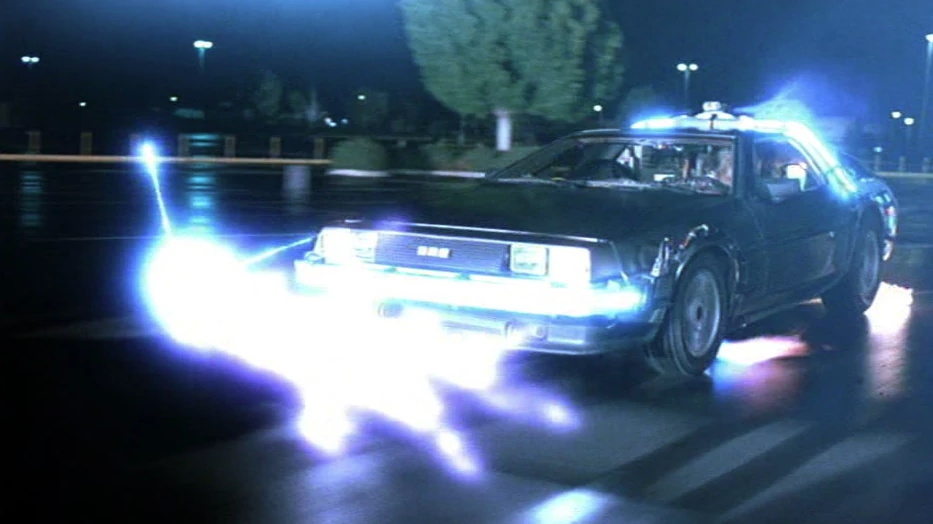
Great Scott !!! We feature Doc Brown’s Time Travelling DeLorean in our Blog about one of the wonders of Time Travel the Time Paradox. What is a Time Paradox - How does it relate to Time Travel and we discuss the science involved.
⏳ Blog Post: Great Scott! The Paradox That Could Unravel the Universe! 🤯
Headline: The Vanishing Act: How Marty McFly Almost Erased Himself with the Grandfather Paradox
The DeLorean Time Machine and the Flux Capacitor are what let us travel through time, but it's the Time Paradoxthat gives the Back to the Future trilogy its heart-pounding tension!
It's not just a cool sci-fi concept; it's the central problem that Marty McFly must fix, and it's the reason Doc Brown is so adamant about one rule: "Do not, under any circumstances, interact with anybody... from your own time."
Understanding the Grandfather Paradox
In the first film, Marty accidentally creates the most famous paradox of all: the Grandfather Paradox.
Paradox TypeThe Core ConceptHow it Applies to Marty McFlyGrandfather ParadoxIf you travel back and prevent your own ancestors from meeting (or existing), then you can't be born. If you're not born, you can't go back in time to prevent them from meeting. This creates an infinite, self-contradictory loop.Marty accidentally prevents his parents, George and Lorraine, from having their first meeting. If they don't fall in love, they don't have children—meaning Marty and his siblings would never be born.The Fading PhotoThe physical manifestation of this paradox is the iconic photograph of Marty and his siblings. As Marty's interference threatens his existence, his siblings begin to fade away from the photo one by one. This is the ticking clock that pushes Marty to fix the timeline before he's erased forever.
Export to Sheets
The "Changeable" Timeline Model
The Back to the Future universe operates on a changeable timeline model, often called the "ripple effect" theory.
Original Timeline (A): The history Marty left, where George is a pushover and Lorraine is unhappy.
Interference (1955): Marty's presence in 1955, especially saving George from the car instead of George's father, changes the cause of their parents' meeting.
New Timeline (B): Marty successfully gets his parents to fall in love and returns to 1985, which is now a vastlyimproved reality. George is a successful, confident author; Lorraine is happy; and Biff is a subservient car washer.
In this model, the past is not fixed. Small changes—like inspiring Goldie Wilson to run for mayor or helping George gain confidence—send a "ripple" through time, which quickly changes the future.
The Paradox of the Paradox
While the film is famous for the Grandfather Paradox, it also subtly includes the Bootstrap Paradox (or Ontological Paradox).
The Problem: The Bootstrap Paradox occurs when an object or piece of information has no original creator—it exists because it was passed back in time to be created in the first place.
Examples in the Film:
"Johnny B. Goode": Marty plays the song on stage in 1955, and Marvin Berry hears it and calls his cousin, Chuck Berry, telling him he's found the "new sound" Chuck has been looking for. This implies Marty, from the future, is the original source of the song in the past. If the song came from the future, who wrote it in the first place?
The Sports Almanac: In Part II, Old Biff gives the Almanac to his younger self in 1955. This piece of information (future sports results) has no point of origin in the altered timeline—it only exists because it was brought back from the future.
The paradoxes in the Back to the Future trilogy are what make it a brilliant piece of sci-fi: they are the high-stakes threat that makes Doc's frantic warnings about the space-time continuum so utterly memorable.